Goal
Design a single-occupant, lightweight camping shelter that simplifies and streamlines the backpacking experience while protecting campers from the elements.
CONTEXT
Backpacking is an activity where a user’s gear defines their experience. Since backpackers are always moving and must carry all of their equipment with them, the design of this gear is key to an enjoyable trip. Every piece of equipment must be considered carefully for both its weight and usefulness on the journey. I saw that the backpacking market needed a tent design that protects users from the elements, but is also compact, easy to setup, and aids in creating a friendly, social campsite.
Design Goals
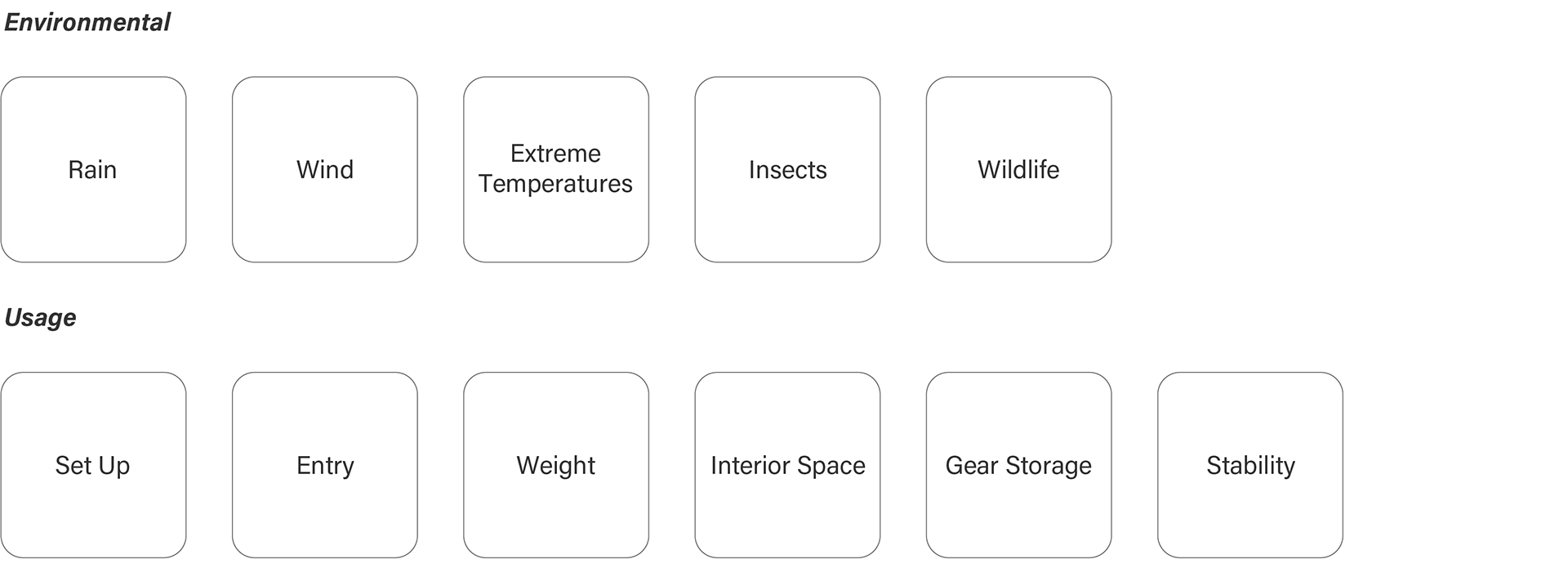
Through my preliminary research, I determined a set of environmental and usage issues that a successful shelter design must address.
User Research
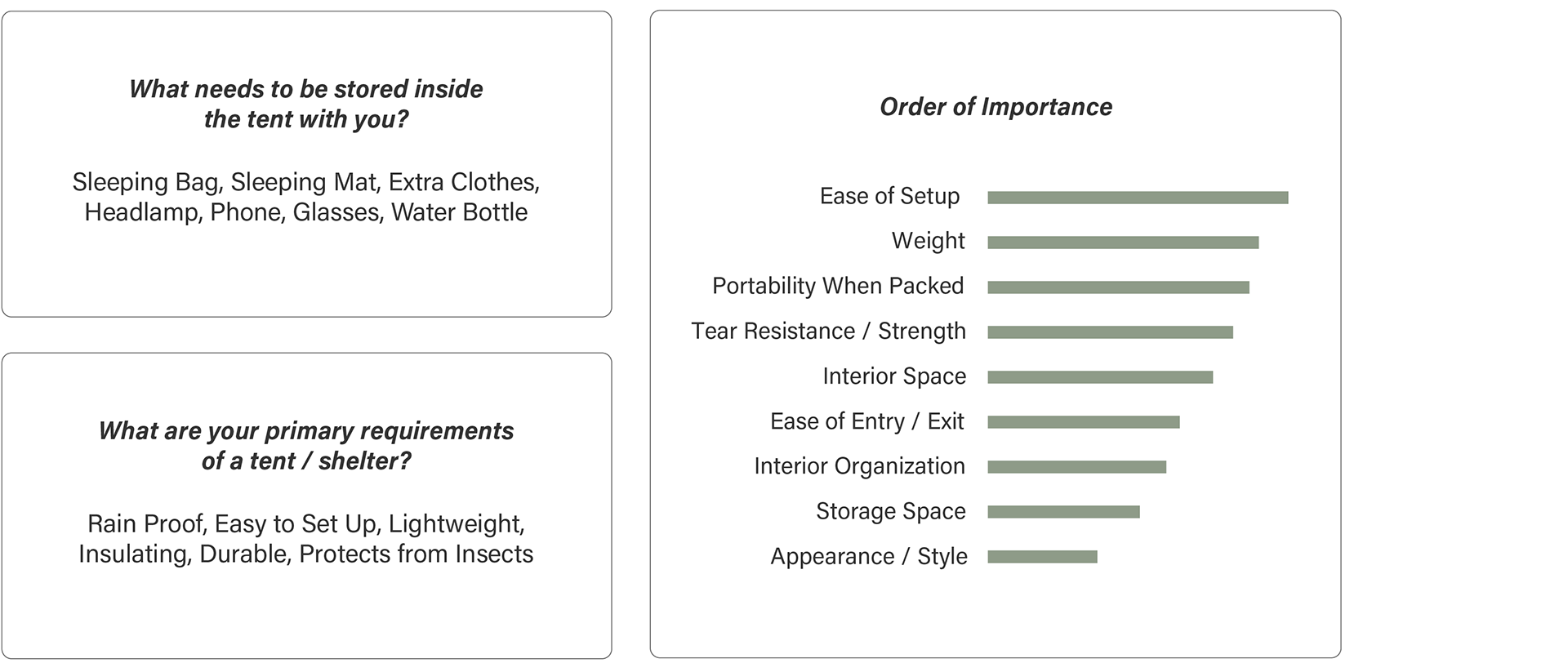
My design was informed by an interview with Kyle Stone, a backpacker who has hiked the full length (2160 miles) of the Appalachian Trail, as well as an online survey of campers. The interview with Kyle gave me insight into the benefits and drawbacks of tents, what alternative shelters are available, and many of the common issues that backpackers have with their gear on long-distance hikes. The online survey I conducted gave me more information about storage requirements within the tent, and what qualities of a tent are most important to users. Three of the survey question results are summarized below.
Sketch Development
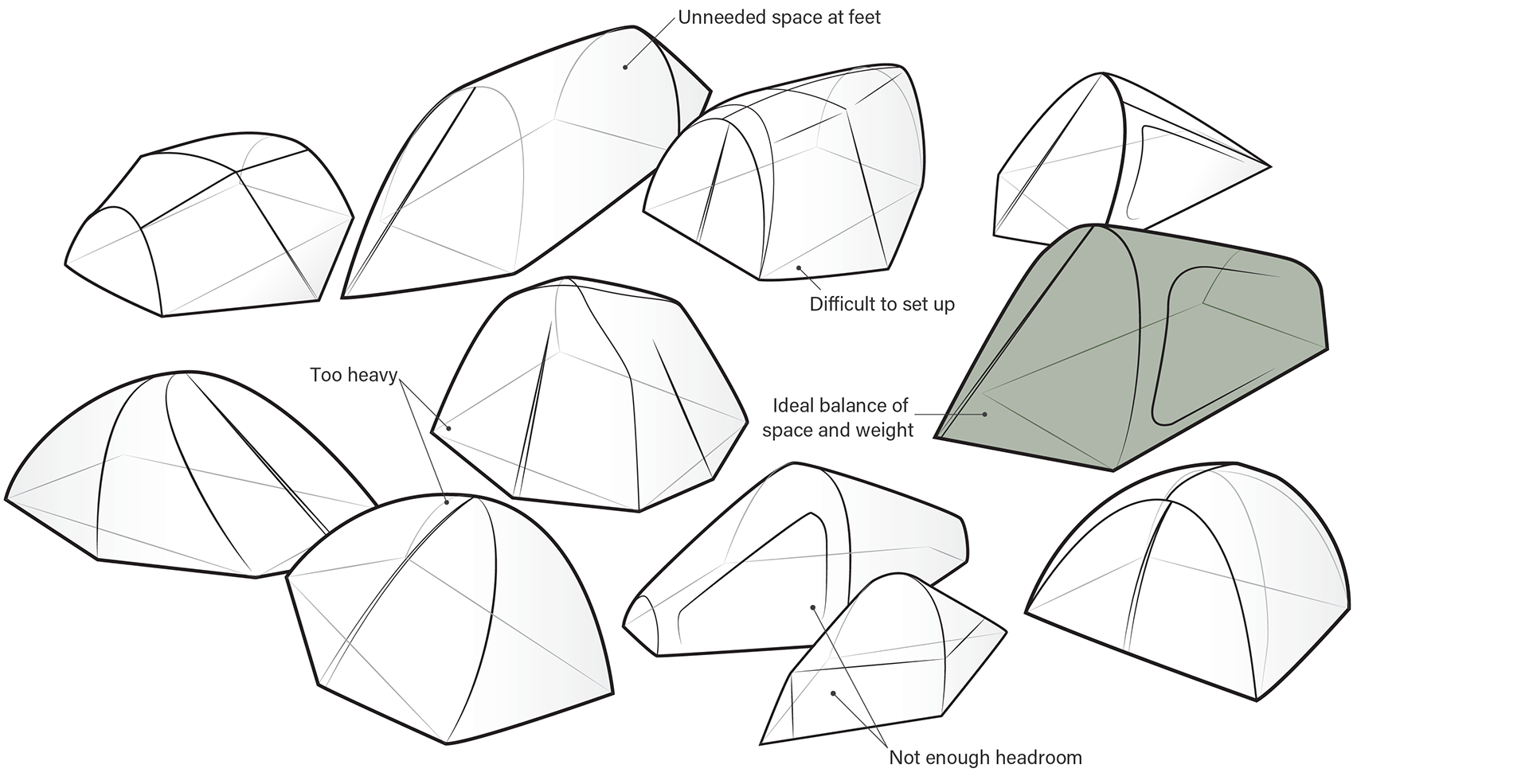
The shape of the tent is dictated by the arrangement of poles, and is a functional, not aesthetic, decision. I ended up settling on a design that only required two small poles and was supported by tension applied by stakes at either end of the tent.
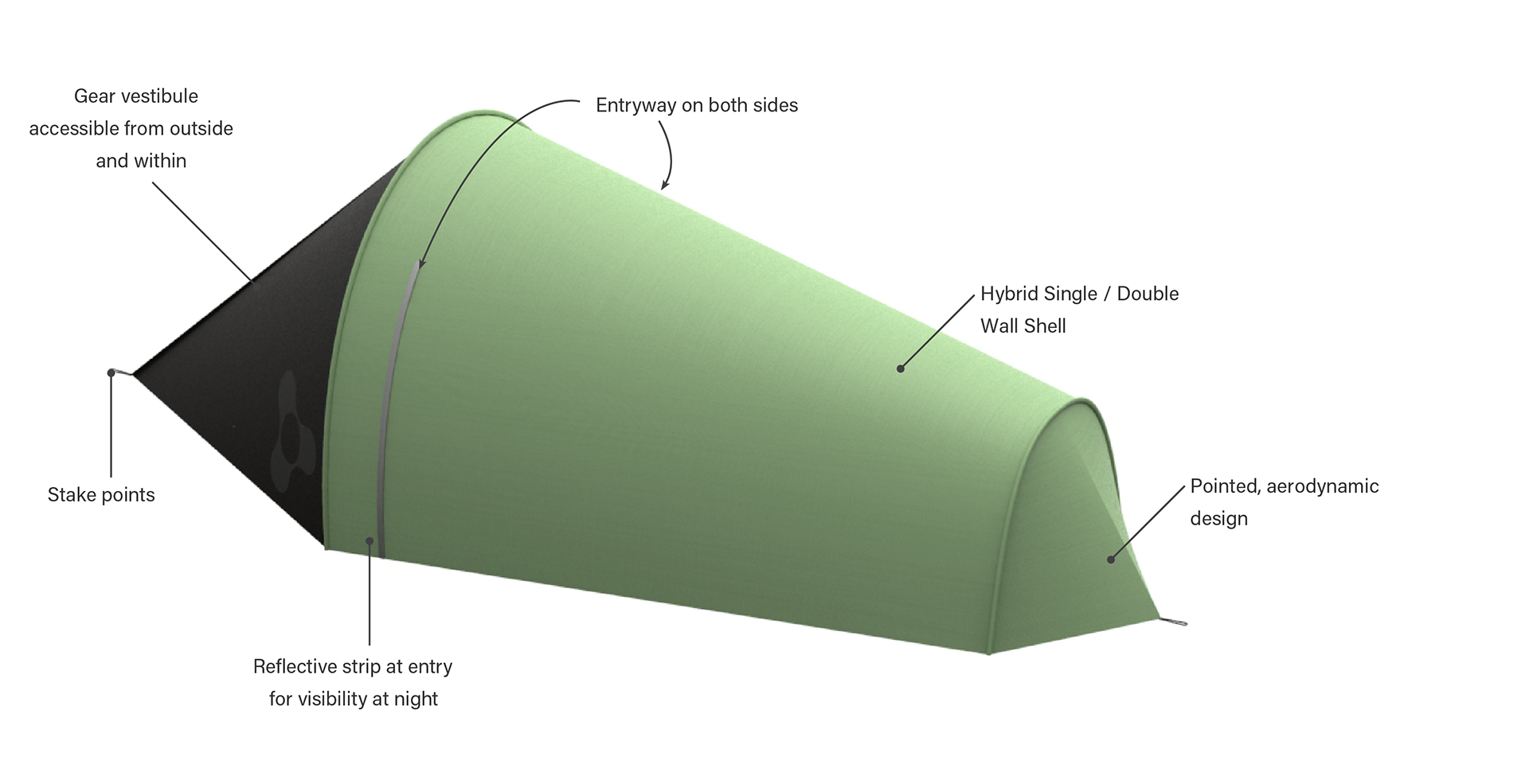
Exterior Features
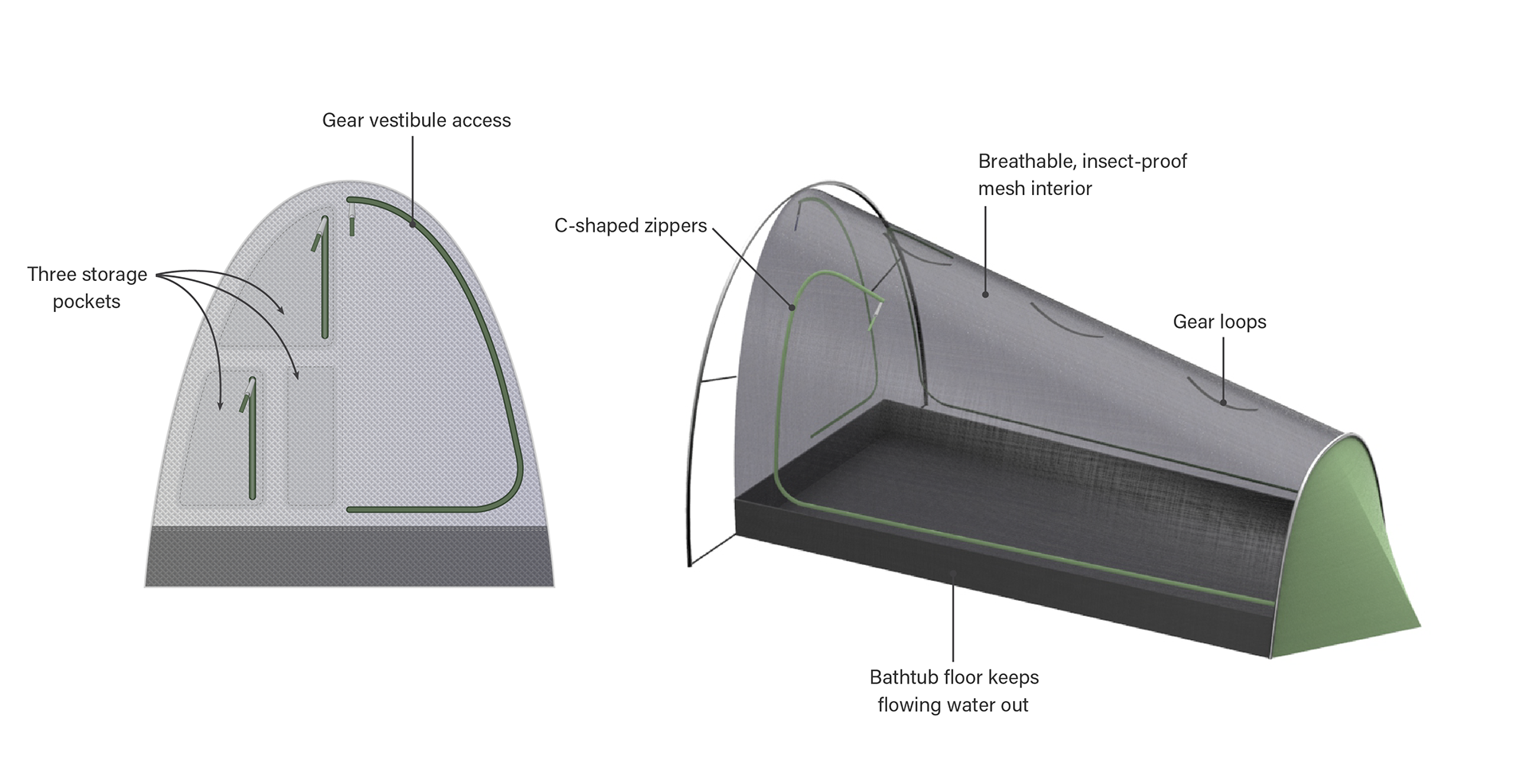
Interior Features
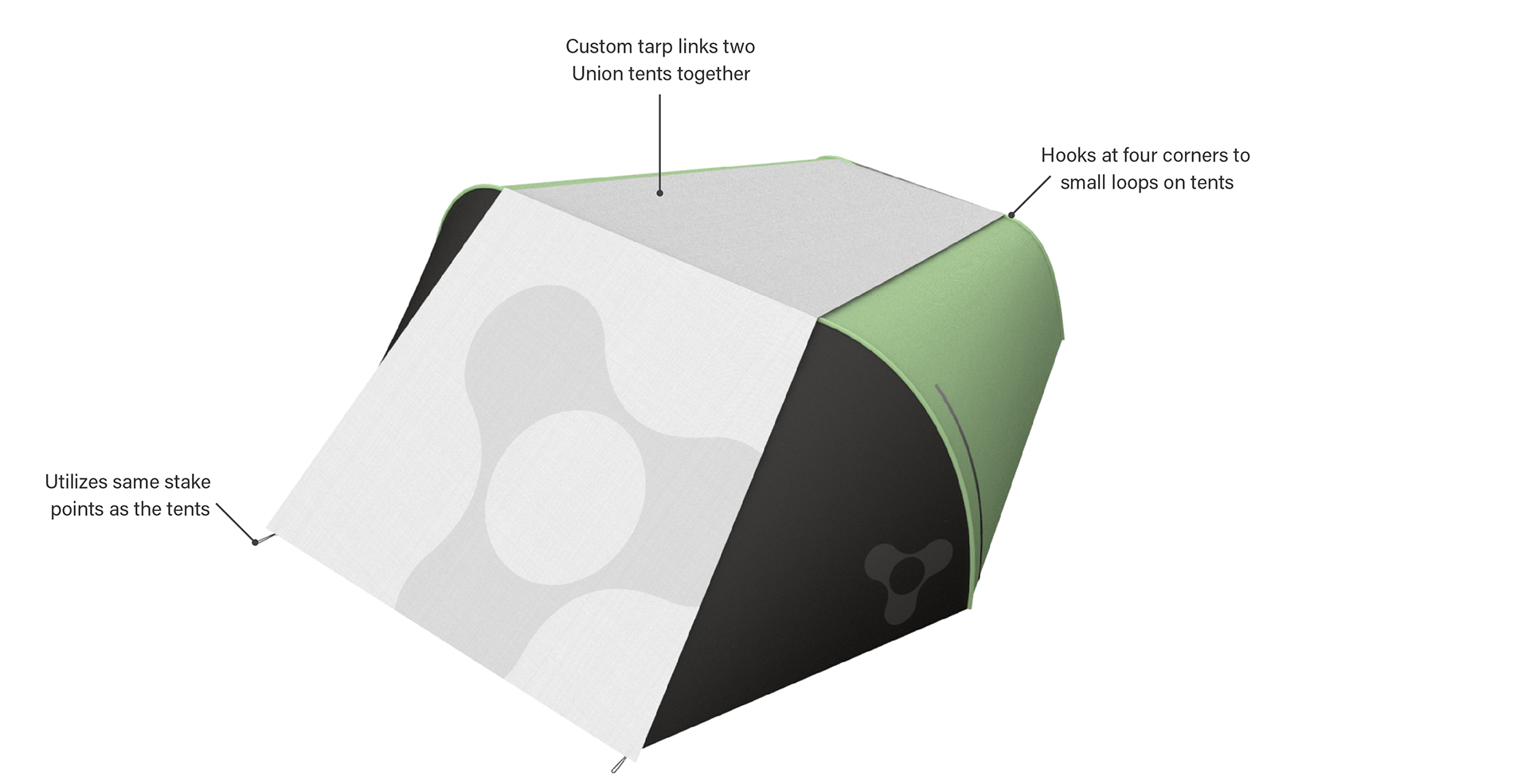
Social Feature
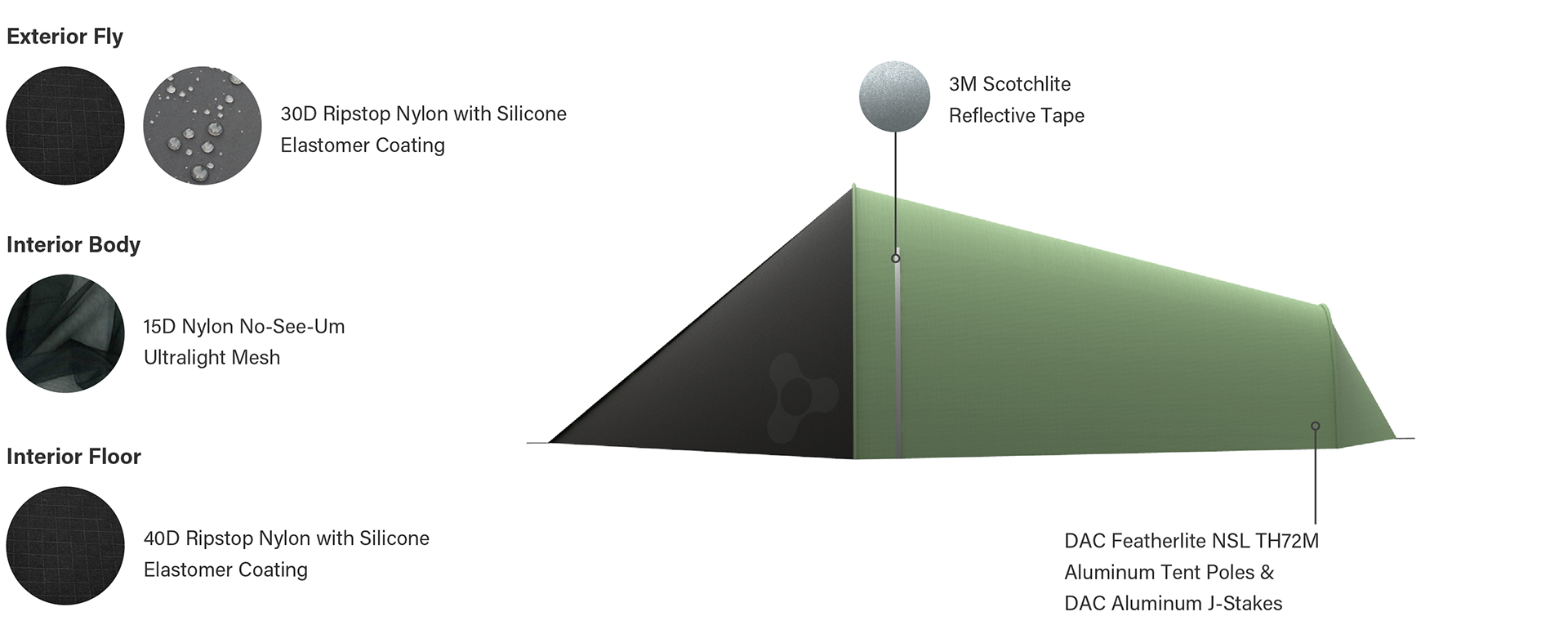
Materials
Branding